Available from Monday to Friday from 9am to 7pm, and Saturday from 10am to 7pm. Closed on Sunday.

Ice skating is both an artistic sport and a leisure activity. It involves gliding on ice with special footwear called ice skates, usually on an ice rink. Originally, it was practised on frozen bodies of water in regions where the climate naturally created such surfaces. The first artificial ice rink was built in London in 1876.
Beyond enthusiasm and the desire to skate, anyone wanting to go ice skating should be in good physical condition and follow certain rules for comfort and safety. For example, it is recommended to wear comfortable clothing that allows free movement. You should also protect your head and hands with suitable equipment.
Several key elements are essential for ice skating, whether you are a beginner or experienced. These include agility, balance, and coordination. A skater must be able to get up quickly after a fall. Once stability on the ice is achieved, they should be able to coordinate their movements. This list is not exhaustive, as other important qualities such as flexibility can also be added.
Anyone wanting to go ice skating should remember that it is a physically demanding sport. Serious physical preparation is recommended. Before starting, skaters should always warm up properly to reduce the risk of injury. The temperature on the ice rink is particularly low, which is an important factor to consider to avoid unpleasant surprises.
Our top resorts for après-ski activities

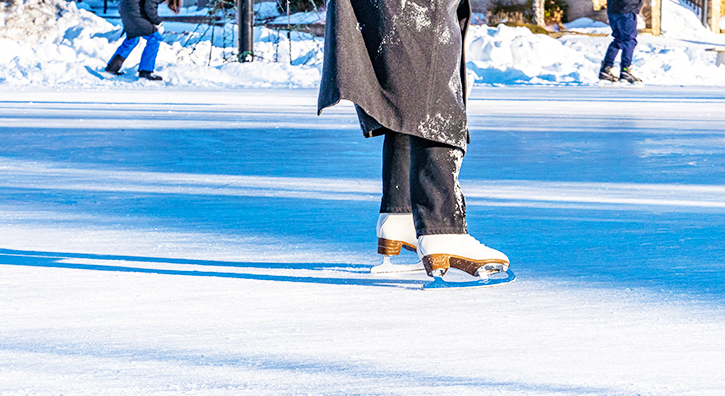
Ice skates are the basic equipment needed for ice skating. There are several models available to meet the specific needs of each skater. For those who want to skate for leisure, a flexible boot design is ideal. For artistic skating, high-cut boots are more suitable. When buying, it's important to consider the type of blade. You should also choose thin socks and make sure the heel does not lift from the skate’s sole and that your toes don’t touch the front of the boot. Depending on the brand and features, prices for these essential items range from a few dozen to several hundred pounds.
A skater needs to wear appropriate clothing that allows freedom of movement and comfort. It’s best to choose functional garments that aren’t too warm. From trousers and leggings to tunics and dresses, these outfits should let you sweat comfortably. Prices vary widely, from a few dozen to several hundred pounds, depending on the type of clothing.
When ice skating, protection is essential as falls are common, especially during the early learning stages. A wide range of protective gear is available for skaters. Wearing a helmet is recommended, and often mandatory for children and beginners. For added safety, novices should wear padded trousers. It’s also advised to wear a hat, gloves, and suitable guards to protect elbows, wrists, and knees. Finally, blade guards provide extra comfort when moving off the ice.

Located in the Tarentaise Valley in the Savoie region, La Plagne is a ski resort that offers a natural ice rink perfectly suited for beginners and children.
Whether at Arc 2000, Arc 1800, or Arc 1600, fans of winter sports will find a perfect place to enjoy ice skating.
This winter sports resort, located near the Écrins National Park, offers several areas where you can enjoy ice skating.
This resort, located in the Belleville Valley, features an indoor ice rink.
This resort lets visitors enjoy the thrill of gliding thanks to its synthetic ice rink.
Val Cenis resort features an artificial ice rink in the village of Lanslevillard and a natural ice rink in Lanslebourg.
In addition to its 150 km of ski slopes, Valloire resort also features an artificial ice rink.
Located in the Maurienne Valley, Valmeinier resort offers an ideal setting for family ice skating.
This resort in the Hautes-Alpes, located above Gap, offers visitors a 1,600 m² ice rink.
This charming Savoyard village-style resort features an ice rink suitable for children aged 12 and over, as well as beginners.